
Police Acted Accordingly Nadda Defends Action Against Protesters

Union Health Minister and Rajya Sabha Leader of the House J.P. Nadda has defended police action against student protesters, describing it as a “normal law and order situation.”
His remarks came during a heated Rajya Sabha session on July 29, after Opposition leaders questioned the government over arrests and detentions linked to recent student protests.
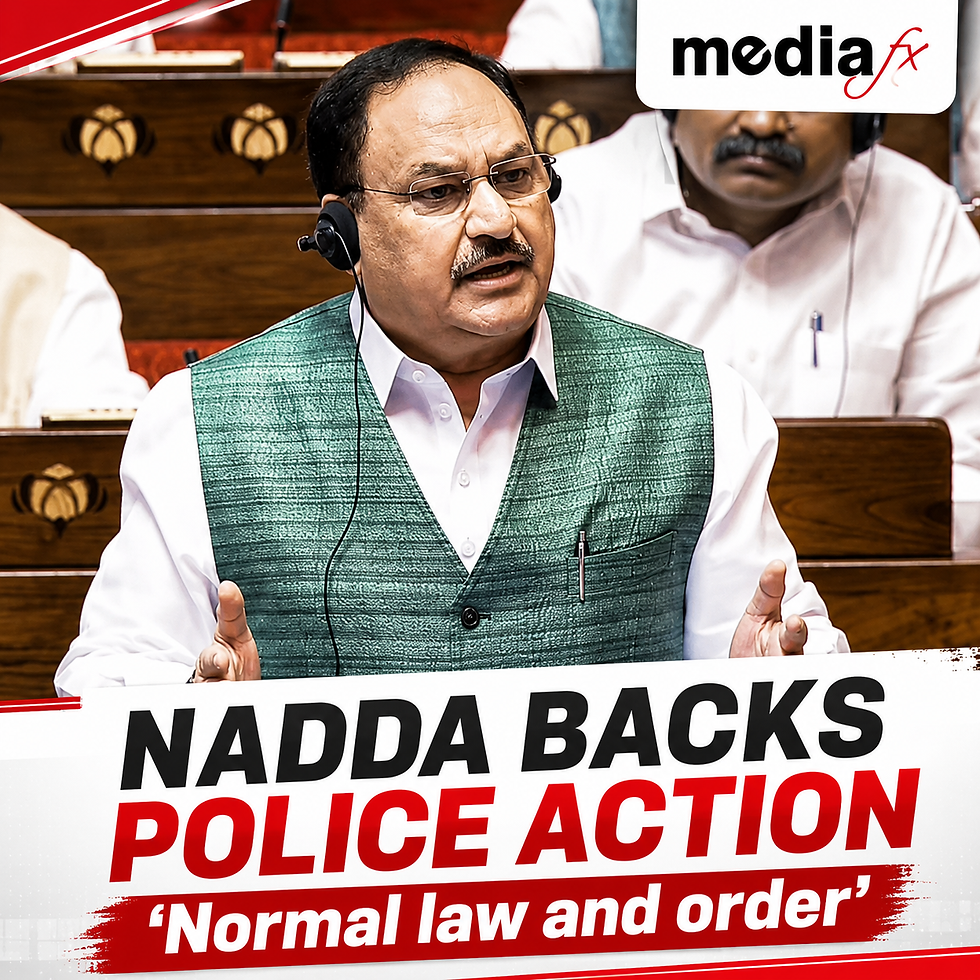
Nadda Backs Police Action
Responding to Congress president Mallikarjun Kharge and CPI(M) MP John Brittas, Nadda said police were required to act when protesters took the law into their own hands.
He accused Opposition leaders of attempting to sensationalise what he described as routine law-enforcement activity.
Nadda argued that student activists must be prepared to face consequences when their protests cross legal limits.
Recalls Emergency-Era Arrests
Nadda also recalled his own experience as a student activist during the Emergency from 1975 to 1977.
He said he had been arrested from his classroom twice while the Congress was in power and suggested that arrests were not unusual for people involved in political activism.
His remarks immediately triggered strong protests from Opposition members inside the Rajya Sabha.
Rajya Sabha Proceedings Disrupted
The heated exchange created a major uproar in the Upper House, forcing proceedings to be adjourned until noon.
Opposition leaders continued to question the Centre over arrests and detentions made following the demonstrations.
They also raised concerns over the reported use of lathis, pellet guns and tear gas during the Cockroach Janta Party’s Chalo Sansad march on July 20.
Protest Group Questions Government
The Cockroach Janta Party has asked the Centre to honour reported assurances that no FIRs or criminal cases would be filed against students and others who participated in the protests.
The issue has now developed into a larger political debate over police powers, youth activism and the democratic right to protest.
For young Indians, the controversy raises an important question: where should authorities draw the line between maintaining public order and protecting peaceful dissent?



Comments