
Yesterday’s Plastic Waste Is Now Hyderabad’s Footpath

Hyderabad has taken another step towards sustainable urban development by constructing a 2-km footpath using recycled plastic waste.
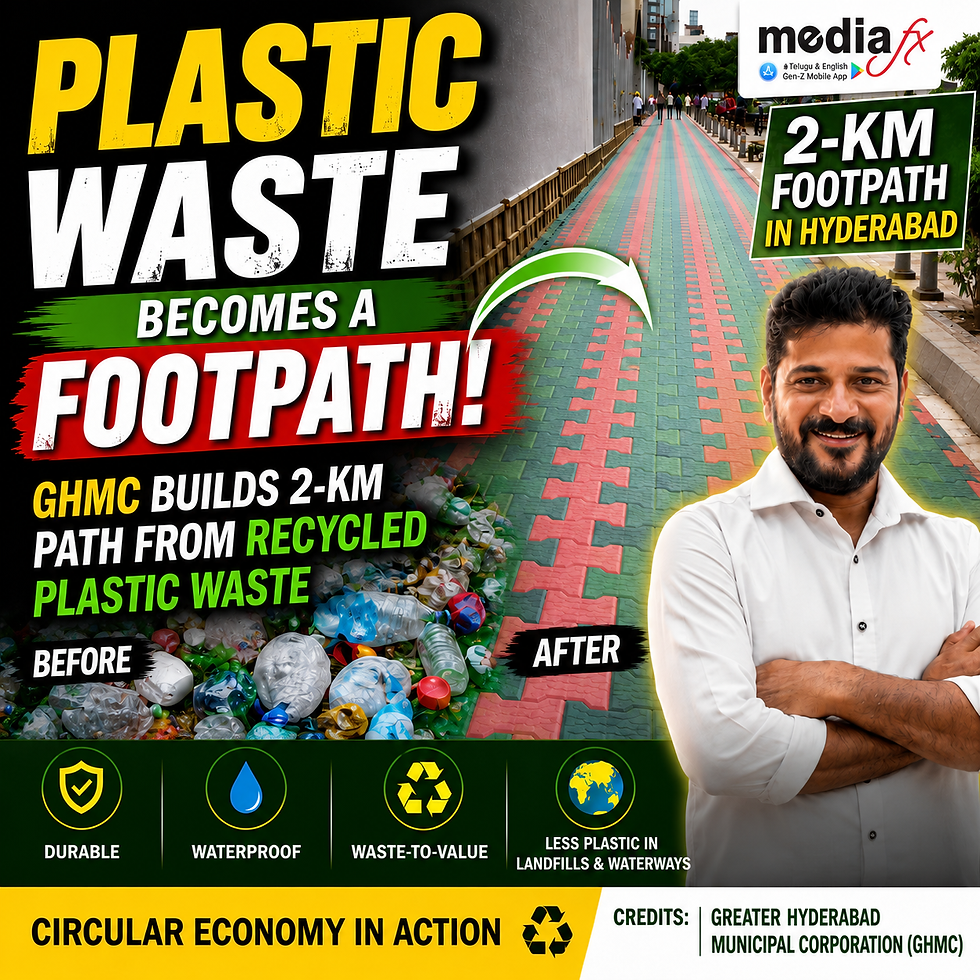
The Greater Hyderabad Municipal Corporation reportedly used discarded plastic materials including bags, bottles and caps to create durable paving blocks for public infrastructure.
The initiative demonstrates how plastic waste can be diverted from landfills and converted into useful construction material.
Turning Waste Into Public Infrastructure
Plastic waste is one of the most persistent environmental challenges facing modern cities.
Instead of allowing discarded plastic to accumulate in landfills, drains and waterways, the GHMC initiative gives the material a second life by processing it into components suitable for footpath construction.
This waste-to-value approach is an example of the circular economy, where discarded materials are reused rather than permanently thrown away.
Why Recycled-Plastic Footpaths Matter
The recycled paving material is promoted as:
Durable for regular pedestrian use
Resistant to water and monsoon conditions
Capable of reducing demand for conventional materials
Useful in diverting plastic from landfills
An example of sustainable civic innovation
The exact performance and environmental benefits will depend on the manufacturing process, plastic composition, maintenance requirements and long-term durability.
Reducing Plastic Pollution
Plastic bags, bottles, wrappers and caps often enter open drains and lakes when they are not collected or processed properly.
Using suitable plastic waste in infrastructure can help reduce uncontrolled dumping while creating demand for segregation and recycling.
However, such projects must also ensure that the material remains stable, does not release harmful substances and can be responsibly handled when the footpath eventually needs replacement.
Circular Economy in Action
The footpath reflects a broader shift from the traditional “use and discard” model towards a system in which waste is treated as a resource.
When supported by proper segregation, collection, processing and quality control, recycled materials can contribute to roads, pavements, street furniture and other urban projects.
A Model for Future Civic Projects
The initiative could encourage greater adoption of recycled materials across Hyderabad’s civic infrastructure.
Scaling up responsibly would require transparent technical standards, independent testing, regular maintenance and public reporting on how much waste is diverted through each project.



Comments