
Retirement Doesn’t Mean Switching Off Your Brain!

Retirement is often seen as a time to slow down and rest, but neurologist Dr Surbhi Chaturvedi says the brain still needs regular activity, learning, social interaction and a sense of purpose to stay healthy with age. (Hindustan Times)
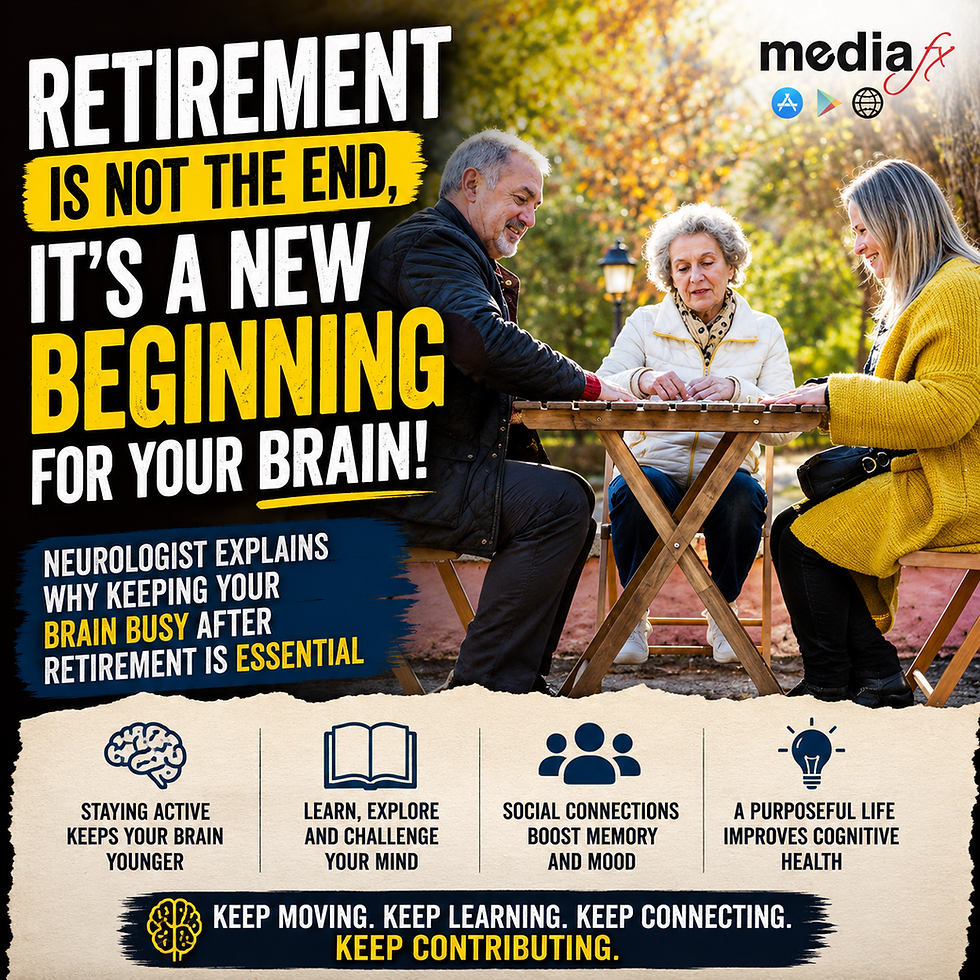
According to Dr Chaturvedi, while the body may benefit from rest, the brain functions better when it remains meaningfully engaged. She says retirement should not become a phase of doing nothing, but a chance to stay active in new ways. (Hindustan Times)
Why the Brain Needs Exercise
With age, memory recall, attention and processing speed may become slower. However, major cognitive decline is not automatic just because a person grows older.
Dr Chaturvedi says physical activity such as walking, yoga, gardening or cycling can improve blood flow to the brain, support new neural connections and help reduce inflammation. (Hindustan Times)
How Retirement Can Become a Risk
Work gives people routine, structure, problem-solving opportunities, social contact and identity.
When these suddenly disappear after retirement, some people may withdraw socially and stop doing mentally stimulating activities. Experts warn that this lack of engagement may increase the risk of faster cognitive decline in some people. (Hindustan Times)
The Healthier Way to Retire
Dr Chaturvedi says retirees who use this phase to learn new skills, volunteer, mentor younger people, travel, take up hobbies and stay socially connected often show better emotional balance and stronger cognitive resilience.
Her simple brain-health prescription is: keep moving, keep learning, keep connecting and keep contributing. (Hindustan Times)


Comments