
Why Are Protesters Demanding The Election Chief’s Resignation?

Political tensions over India’s electoral rolls intensified on October 2 as protests were organised in Delhi and Mumbai demanding the resignation of Chief Election Commissioner Gyanesh Kumar.
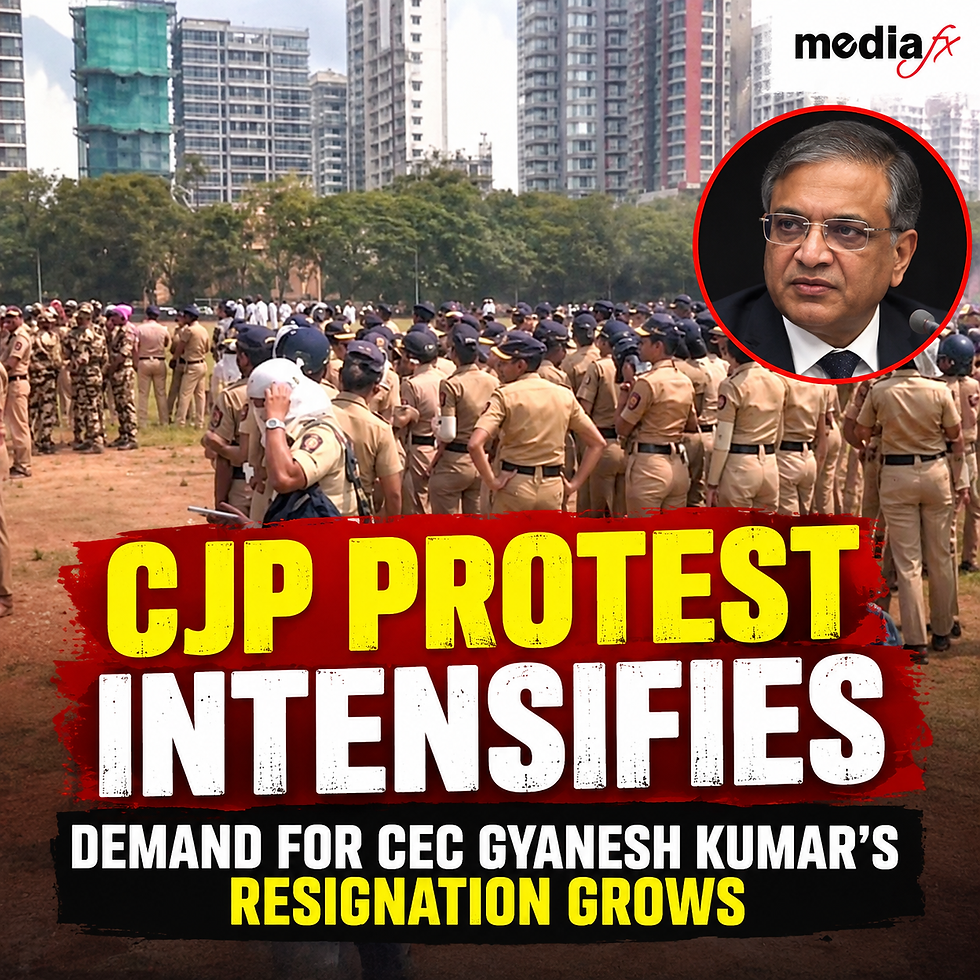
In Mumbai, the youth-led Cockroach Janta Party (CJP), founded by Abhijeet Dipke, announced a “Jail Bharo Andolan” at Shivaji Park. Heavy police deployment was reported around the venue. Mumbai Police said it could not grant permission for the gathering at Shivaji Park because of a 2013 Bombay High Court order and the area’s status as a silence zone.
Dipke was also briefly taken to Marine Drive police station after appearing with supporters carrying placards and was released shortly afterward. CJP says its campaign is independent of a separate opposition programme and has threatened to expand demonstrations to other cities.
The central issue is the Election Commission’s Special Intensive Revision (SIR) of electoral rolls. CJP and opposition groups have alleged problems and irregularities in the process and are demanding greater accountability from the poll body. The Election Commission, however, has maintained that decisions relating to SIR were taken unanimously by its three-member commission.
Meanwhile, a separate protest was called at Jantar Mantar in Delhi by activists, student organisations and political figures. Delhi Police denied permission and strengthened security in the area. By early afternoon, police had detained protesters, including AAP leaders and student activists, according to reports cited by the Times of India. Mobile internet services were also reported disrupted around Jantar Mantar.
The demonstrations come amid a broader political dispute over electoral-roll revisions. Protest organisers argue that legitimate voters risk exclusion, while the Election Commission says the revision process is intended to address problems such as duplicate and ineligible entries.



Comments