New Parliament Building, A elaborate plan to reduce south India representation in parliament ? 🤔
- Tatipaka Premchand
- May 29, 2023
- 2 min read


India's parliamentary constituencies' delimitation exercise has been deferred repeatedly, sparking debates and discussions throughout the country. This intricate process, aimed at redrawing the boundaries of parliamentary and assembly constituencies to reflect the latest population dynamics, is scheduled to proceed under the Bharatiya Janata Party (BJP)-led government.
However, the proposed shift to allocate Lok Sabha seats based on current populations could lead to an unequal distribution of political power, with southern states, which have successfully curtailed their population growth over the years, finding themselves at a disadvantage. This is particularly concerning as it runs the risk of undermining representation from regions that have successfully achieved the national goal of population control.
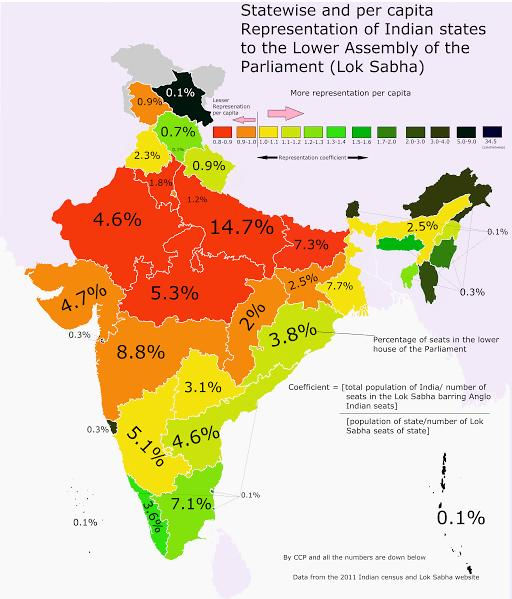
Under Prime Minister Narendra Modi, the BJP government appears to have strategic interests aligned with this delimitation exercise. The redistribution will likely increase the number of seats in North Indian states, potentially fortifying the BJP's political stronghold in these regions. This political reconfiguration is not just about numbers; it is about the power and influence that those numbers signify.

To alleviate criticism and potential discontent, the Modi government plans to couple this exercise with the inauguration of the new Parliament building, which can accommodate a larger number of members. This move can be seen as an attempt to maintain, or even increase, the number of seats allocated to each state, thereby preventing the southern states from feeling sidelined. However, this strategy could mask an underlying issue: despite the increase in the absolute number of seats, the proportional representation of South Indian states could decrease, subtly shifting the power balance.
The implications of this delimitation exercise are profound. Critics argue that it might reinforce the North-South divide in India, affecting not only political representation but also resource allocation and policy decisions. On the other hand, supporters of the exercise see it as a necessary adjustment to reflect demographic changes.
The challenge for the BJP government, and indeed for Indian democracy, is to ensure that the delimitation exercise does not exacerbate regional disparities or marginalize certain populations. The government must strive to strike a balance between representing current demographic realities and rewarding states that have made significant strides in population control. It is a delicate balancing act, one that requires thoughtful consideration, careful planning, and above all, a commitment to upholding the principles of equal and fair representation.


Comments